How to Pitch Your Song to Spotify Editorial Playlists
Every artist wants to know the trick to getting on a big Spotify playlist. There isn't really a trick. There's a form, a deadline, and a handful of details most people fill out carelessly and then wonder why nothing happened.
Editorial playlists are the ones with an actual person behind them — RapCaviar, Today's Top Hits, the genre-specific ones like Mint or Lorem. They're different from Discover Weekly or Release Radar, which are algorithmic and personalized to each listener. Editorial is still one of the only ways a small artist can get put in front of a large audience all at once without already having that audience or paying for ads. That's exactly why it's competitive, and why most pitches go nowhere.
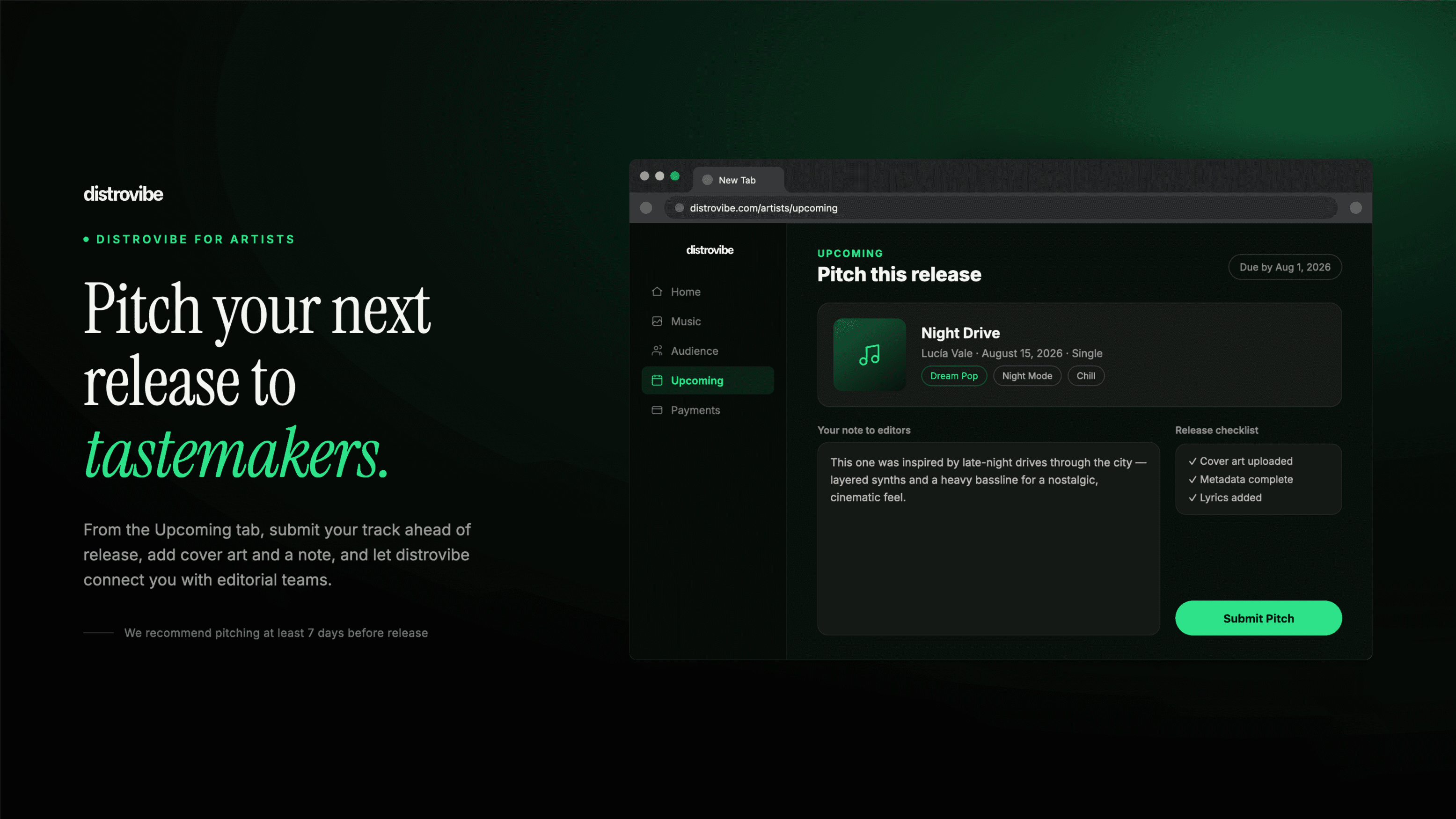
The biggest mistake, by far, is timing. Spotify only looks at pitches for music that hasn't come out yet. Once your track is live, the editorial window is closed — permanently, for that release. It can still show up in algorithmic playlists later, but a human editor isn't going to consider it anymore. So the release needs to be scheduled and sitting in Spotify for Artists as "Upcoming" with enough runway, realistically ten to fourteen days before it drops, and the pitch needs to go in the moment that's possible. Not the week of release. Not "when you get around to it."
Once you're in the pitch form, actually fill it out. Not the two obvious fields and then click submit. Genre and mood need to be accurate, not aspirational — tagging a mellow R&B track as pop because the pop team has bigger playlists doesn't work, and it wears thin with that team over time if you keep doing it. Mention the actual instrumentation, because a lot of mood and instrument-based playlists are built around exactly that detail, not vibes. And write a real sentence or two about what the song's about or why you made it. Editors read an enormous number of these submissions in a day. A specific, human sentence stands out against "this song is about love and life," which says nothing.
The other thing worth understanding: editors aren't grading your song in isolation, they're maintaining the identity of a specific playlist. A well-produced track can get skipped over simply because it doesn't fit the sound of the playlists in its genre right now. Before pitching anything, it's worth actually listening to the playlists you're hoping to land on — the tempo, the production style, how consistent the mood is across the tracklist. If your song is a clear outlier from everything already on those playlists, that's telling you something about fit, not about quality.
Small things help too, even if they don't decide anything by themselves. Adding a Canvas — the short looping visual under the track — signals a release that's actually been put together with intention. A Spotify for Artists profile with a current photo and a real bio matters more than people think, because editors sometimes check it before deciding. Pre-saves don't influence an editorial decision directly, but they do feed Release Radar for your existing listeners, so it's not wasted effort even without editorial.
A few things are worth saying plainly because people still try them: don't buy streams or engagement. Spotify has fraud detection built specifically to catch this, and a flagged track can lose royalties or get pulled entirely — it's not a gray area, it's something the platform actively polices. Same with services promising "guaranteed playlist placement." Real editorial and algorithmic placement can't be bought. Anything claiming otherwise is either a low-quality independent playlist nobody actually listens to, or the exact kind of manipulation that puts your account at risk. And if a pitch doesn't land, resubmitting the same information for the same release won't change the outcome — the moment to adjust is on the next release, not by repeating the last one.
Realistically, most songs don't get a major editorial placement, even ones that are well made and pitched properly. That's just how it works, especially early on. What actually compounds over time is doing this the same careful way on every release — accurate info, submitted early, tailored to the song. It costs nothing extra to do it right, and a track record with editors builds slowly, release after release. Treat it as a normal part of putting a song out, not something you try once and give up on.