Most guides to "uploading music to TikTok" answer the wrong question. They explain how to add a sound to a video you're posting, which is not the same thing as getting your own release into TikTok's system so that other people can find and use it. If you're an artist trying to get your song discoverable on TikTok, distribution and posting are two separate problems, and mixing them up is why a lot of advice out there doesn't actually help.
Here's how the real process works.
Two Different Things People Mean By "TikTok Music"
Posting a video with a sound attached. This is what most TikTok tutorials cover: tap the create button, record or upload a clip, tap Add Sound, search for a song already in TikTok's library, trim a section, post. This works with any sound already available on the platform, whether it's yours or someone else's.
Getting your own release into TikTok's catalog in the first place. This is the actual distribution question, and it's a separate step that happens before any of the above is possible. If your song isn't in TikTok's system yet, it won't show up as a searchable sound no matter how many videos you personally post with it.
The confusion between these two is the single biggest source of frustration for artists asking "why can't people find my song on TikTok."
Getting Your Catalog Into TikTok
TikTok doesn't accept music uploads directly from artists for full catalog releases. Your track reaches TikTok's system the same way it reaches Spotify or Apple Music: through a distributor. When you release through Distrovibe, TikTok is included as a standard delivery destination, the same as any other major platform, with no separate submission process required.
What you need before submitting:
Audio. Lossless WAV, ideally 16-bit or 24-bit at 44.1kHz, for the cleanest delivery.
Artwork. Square format, high resolution, no text, URLs, or logos overlaid on the image.
Metadata. Final artist name, track title, contributor credits, and rights confirmation that you own or control everything in the track, including any samples.
Confidence that your name is spelled consistently everywhere. This matters more on TikTok than most platforms: a mismatch between your distributor delivery and how your name appears anywhere else on TikTok is the most common reason artist profiles don't verify cleanly later.
Once submitted, your track becomes part of what's sometimes called TikTok's audio library on the backend, making it available as a selectable sound for any creator on the platform, not just you.
Note: there's a separate system called the Commercial Music Library, a pre-cleared catalog of licensed tracks specifically for TikTok Business accounts to use in ads and brand content without individual licensing. That's a different thing from your artist release being distributed to TikTok, and getting your track into the standard catalog through a distributor doesn't automatically place it in the Commercial Music Library.
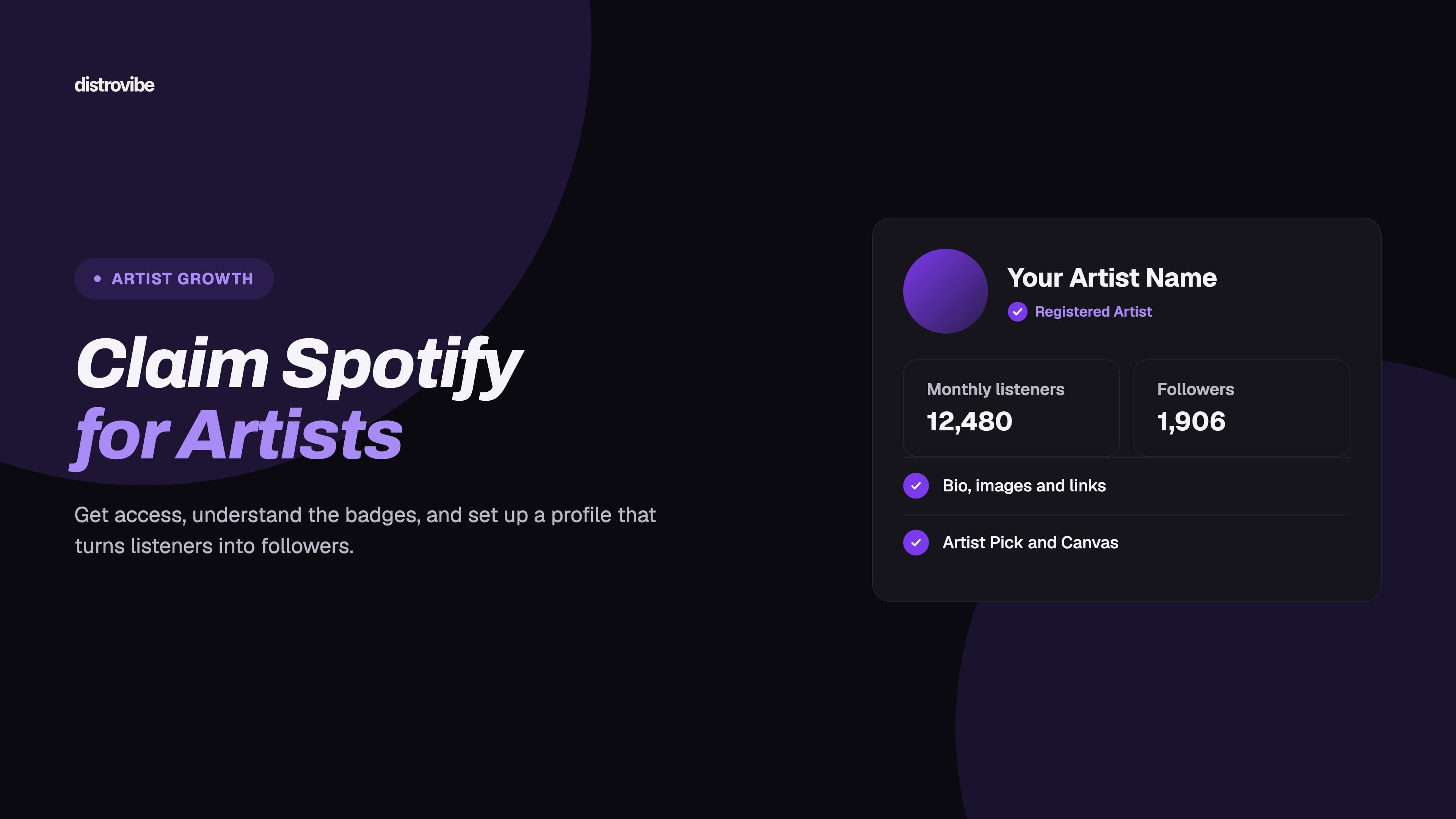
Claiming TikTok for Artists
Once your release is live on the platform, this is the step that turns a distributed track into something you can actually manage and measure, and it's free.
Go to artists.tiktok.com and click "Get Started."
Continue with your TikTok account, or create one if you don't already have it.
Find your artist profile and tap "Claim."
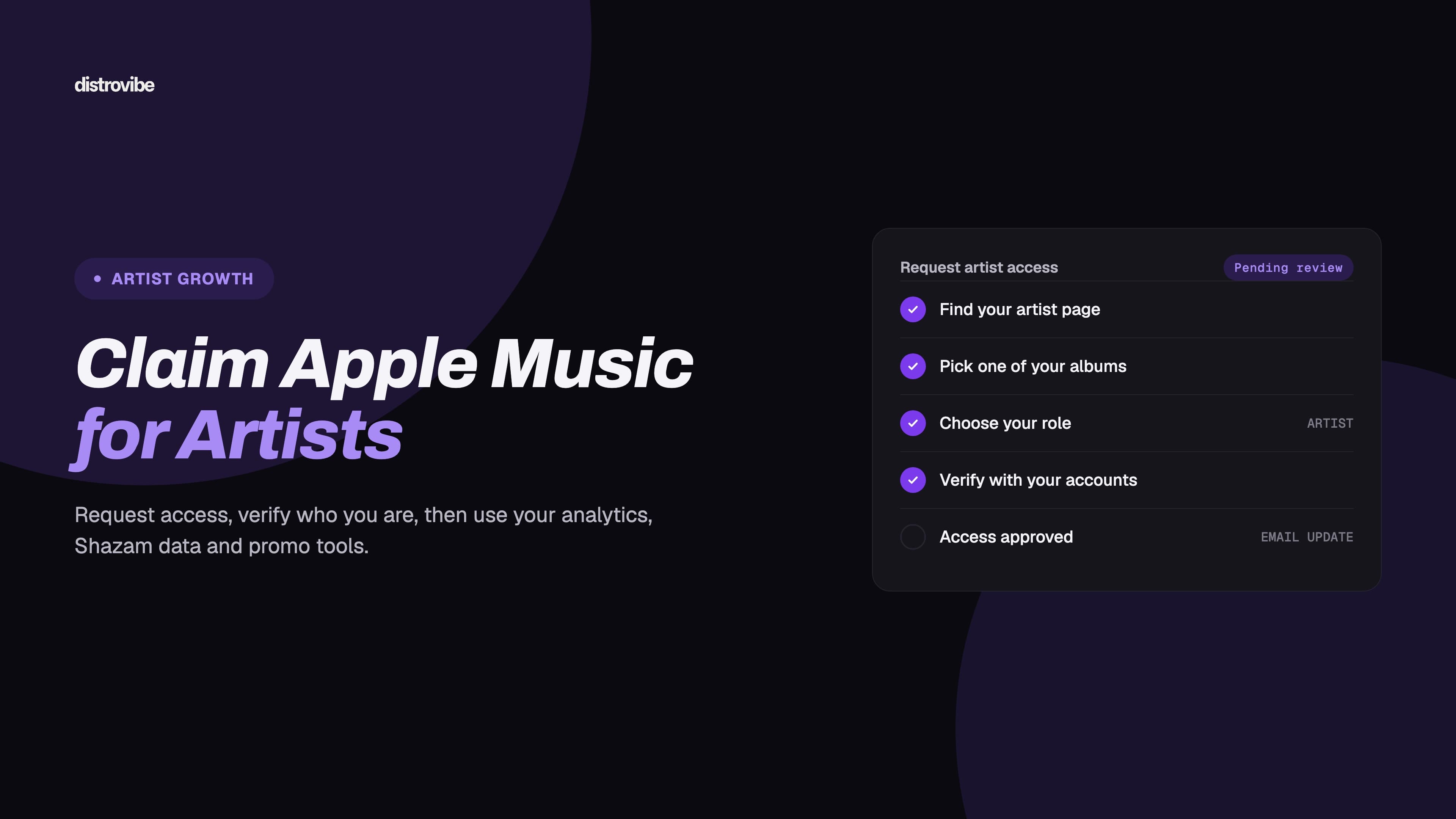
Verify ownership: log into your distributor or another platform where you're the confirmed rights holder, and submit screenshots showing your artist name and track titles alongside profile-editing controls, proving you're the account owner.
Submit and wait, typically up to 30 days for review.
There's no minimum follower count required to claim your profile. Once approved, you get a Music Tab and Artist Tag on your TikTok page, access to real analytics (not just basic creator engagement stats), and a Pre-Release tool that lets fans pre-save an upcoming track directly to Spotify or Apple Music from TikTok, ahead of the release date.
Why the First Six Weeks Matter More Than You'd Expect
TikTok's recommendation algorithm needs time to learn who to show a given sound to. This isn't unique to music, it's how TikTok's content system generally works, but it has a specific implication for artists: a track's early performance across roughly its first six weeks of activity shapes how widely the algorithm continues to push it afterward. Posting once and moving on to the next release doesn't give the system enough signal to work with.
This is also why creator usage matters more than plays from your own account. TikTok's discovery model rewards a sound being picked up and used across many different creators' videos, not just repeated posting from the artist's own profile. A song that gets used organically in ten other people's content is a stronger signal to the algorithm than the same song posted twenty times from one account.
Writing For the First Two Seconds
Because TikTok is a scroll-past platform, the opening of a track carries a disproportionate amount of the weight. If a sound doesn't give a viewer a reason to keep watching in the first one to two seconds, it gets scrolled past before the rest of the track matters at all.
Practically, this changes what "the hook" means for a TikTok-oriented release. It's not just about writing a catchy chorus for the full listen, it's about identifying (or specifically producing) an 8-15 second segment with an immediate, attention-grabbing moment right at the start, since that's the clip most creators will actually use. Some artists structure a specific edit or intro version of a track for this reason, separate from the version distributed to streaming platforms.
Common Mistakes
Assuming distribution equals discovery. Getting a track into TikTok's catalog is necessary but not sufficient. Without any creator activity around it, a distributed-but-unused track just sits there.
Skipping the artist profile claim. Without it, you don't get analytics, the Pre-Release tool, or the credibility signal of a verified artist page, and you're relying entirely on organic creator pickup with no visibility into what's working.
Posting once and waiting. Given the six-week learning window, a single post doesn't generate enough signal for the algorithm to build a clear picture of who the track resonates with.
Ignoring the Commercial Music Library distinction. If you're also running a TikTok Business account for promotion, remember that business accounts default to Commercial Music Library sounds only. A track that's fine for personal use might not be usable the same way from a business profile without separate commercial clearance.
The Bottom Line
Uploading to TikTok, in the sense that actually matters for an artist, happens through your distributor, not through the app itself. What happens after delivery, claiming your TikTok for Artists profile, giving the algorithm enough activity to learn from, and building a track around a hook that survives the first two seconds, is where most of the real work is. Distrovibe delivers your release to TikTok as a standard part of every release, so the distribution half of this is already handled the moment you upload; the claiming and the hook-writing are on you.